
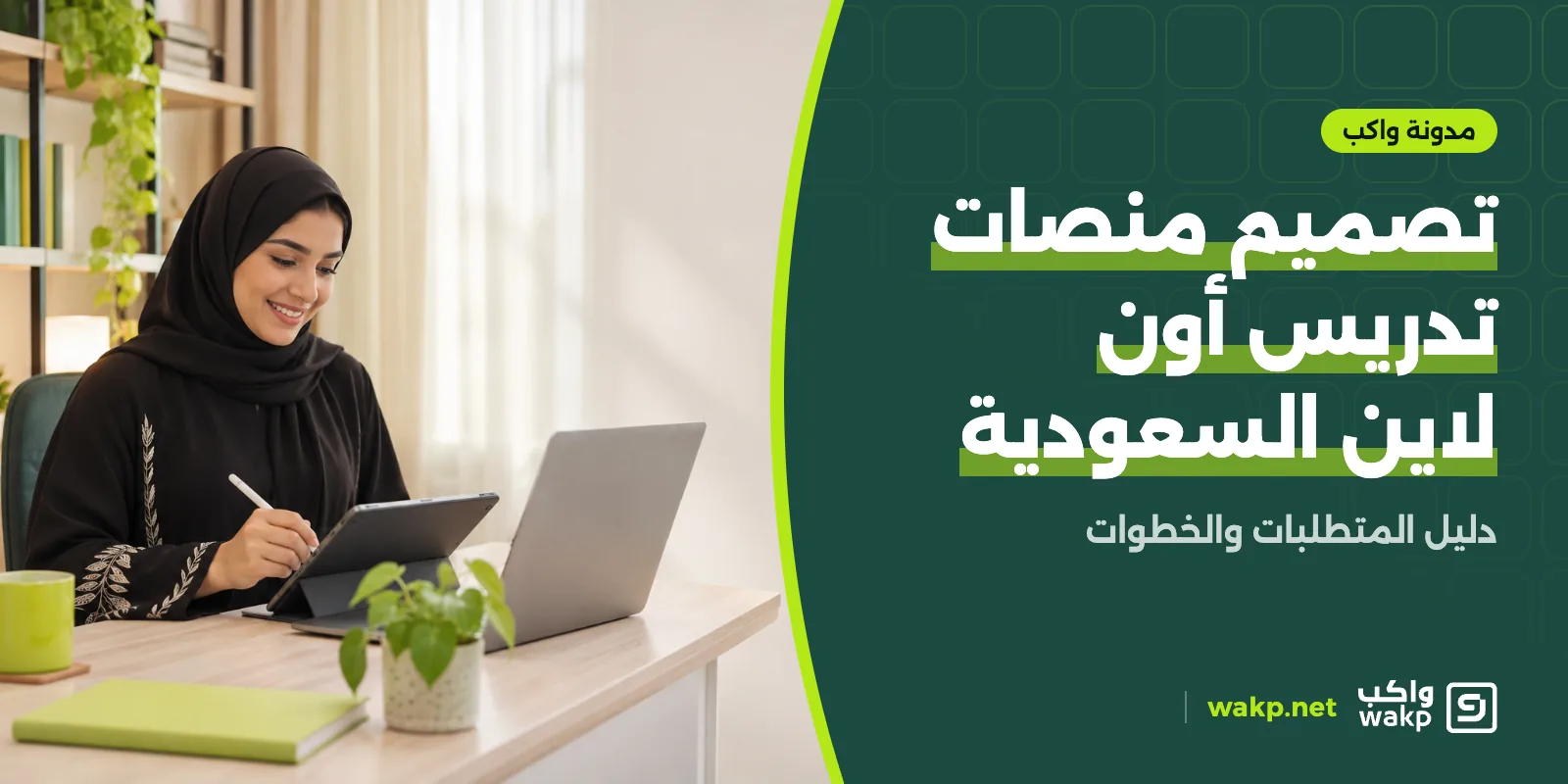
Online teaching platform design in Saudi Arabia needs the usual learning functions plus local fit: a fully right-to-left Arabic interface, Hijri calendar support, Saudi riyal and local payment methods, personal data protection, and alignment with quality bodies such as the National eLearning Center. Define your model first (teacher, academy, school), then choose the technology.
Online teaching platform design in Saudi Arabia is a technical and educational project with local requirements that go beyond uploading recorded lessons. This article explains what a platform operating in the Kingdom needs, how to build it, and what to check before contracting any provider. For the general, country-neutral guide, start with the guide to creating an educational platform.
Why the Saudi context is different
Digital education in Saudi Arabia sits within a clear official ecosystem. The Ministry of Education offers its own platforms, including Madrasati, which the Ministry lists on its site as an electronic learning management system, and Ain, whose educational satellite broadcasting is described as providing distance learning opportunities. The National eLearning Center is concerned with controlling the quality of electronic education and training and helping bodies deliver it to high standards.
That does not mean your own platform must copy the Ministry's. It does mean students' and parents' expectations are shaped by those platforms: easy sign-in, correct Arabic and clarity about assignments and deadlines.
Requirements specific to the Saudi market
1. A fully Arabic interface
The platform needs right-to-left layout on every screen, not a surface translation of a foreign interface. Check how tables, forms, numbers and certificates render in Arabic, and whether messages to students read well in Arabic.
2. The Hijri calendar
Study and holidays in the Kingdom follow the official calendar, and people work with both Hijri and Gregorian dates. Ask the provider: are assignment and session dates shown in both Hijri (Umm al-Qura) and Gregorian? Can the year and term be set as your body defines them?
3. Saudi riyal and local payment methods
If your platform sells courses or collects fees, local currency is essential. Check which widely used Saudi methods your payment provider supports, such as mada cards and Apple Pay, and whether invoices appear in riyals with the required tax details. Tax rules change, so confirm with the competent authority and your accountant before launch.
4. Personal data protection
A teaching platform stores learner data, and some learners may be minors. You need a clear privacy policy, role-based permissions, and knowledge of where data is stored and who can reach it. The Saudi Data and AI Authority oversees the personal data protection framework in the Kingdom, so read the official text and consult a legal specialist on your obligations.
5. Quality and accreditation
If you are an academy or training centre, review what the National eLearning Center requires of bodies offering electronic programmes, and whether your programmes need a licence or accreditation. Do not assume the answer; confirm it from the official source.
Platform models by activity
| Model | Core need | Notes |
|---|---|---|
| Independent teacher | Upload lessons, live sessions, assignments, collect payments | Usually a simple, fast-to-set-up solution |
| Academy or training centre | Courses, several trainers, subscriptions, certificates | Needs trainer and learner management and reports |
| School | Classes, registered students, official grades, parents | Best served by a school management system with an online learning module |
For a detailed comparison of types, read how to choose an e-learning platform.
Core features of any teaching platform
- Course and content management: courses in units and lessons; video, files and text.
- Live and recorded lessons: live sessions and recordings to rewatch.
- Quizzes and assessment: objective and essay questions, grading and results.
- Permissions: separate roles for teacher, student and management.
- Subscriptions and payment: for commercial platforms, in local currency.
- Mobile: a smooth phone experience, since many students sign in from phones.
Steps to design an online teaching platform
- Define the idea and audience: which stage, subject or skill, and who are the learners?
- Define the teaching model: recorded, live or blended.
- Choose the technical approach: a ready system, add-ons to a website, or custom development.
- Organise content: split the course into short units and lessons with clear objectives.
- Design the user experience: simple sign-in, correct Arabic and notifications.
- Test before launch: with real teachers and students, on mobile and desktop.
- Launch and improve: start with a small group and review their feedback.
For the general detail on these steps see the comprehensive guide. To pick the right type of platform in the Kingdom by stage and body, see distance learning platforms in Saudi Arabia. If your interest is the individual teacher, there is a dedicated article, designing online teaching platforms.
Common mistakes when designing a teaching platform for the Saudi market
- Translating a foreign interface without proper RTL: numbers and tables break and students struggle.
- Ignoring the Hijri date in study and exam dates for an audience that uses it.
- Tying payment to a single method when your audience uses several.
- Collecting more student data than needed without a privacy policy.
- Launching mobile late: many learners sign in from a phone first.
- Assuming licensing is not needed without checking with the authority for your type of activity.
Cost and revenue models
There is no standard cost for designing a platform, because it depends on the approach chosen. Subscribing to a ready system means recurring fees and limited set-up; custom development means an upfront build cost and then maintenance and updates. When requesting offers, ask for a written breakdown covering subscription or development fees, set-up, training, support, the cost of add-ons and extra users, and payment commissions if any.
If the platform is commercial, define the revenue model early: a fixed-price course, a recurring subscription, lesson bundles or a fee per live session. The revenue model determines what you need from the payment gateway, subscription management and invoicing. Remember that returns depend on content quality and marketing, not the platform alone, so do not rely on ready-made promises of profit.
For a new teacher, it is better to start with one course and a small group and test demand before investing in a full platform. A school weighs cost against the administrative effort saved and what is added to learning, not against direct revenue.
How to choose a platform design provider
Ask these before signing:
- Does the platform run in right-to-left Arabic at high quality?
- Does payment support local methods and riyals?
- Where is data stored and how is it protected?
- Can I test a real scenario?
- Who provides technical support, in which language and during which hours?
- Can I export my data if I change provider?
- What does future development cost?
How wakp helps
wakp is a school management system with an online learning (LMS) module. It serves schools, academies, training centres and institutes, and the online learning package runs standalone. What it does not offer is a course marketplace for individual teachers selling courses to the public. For the Kingdom specifically, wakp provides:
- Automatic set-up of the online course for each official subject, linked to the year's classes.
- Content building in units and lessons (video, file, text), assignments, objective and essay quizzes, and live sessions.
- Progress and reports per student and subject, with alerts for inactive students.
- Badges, certificates and discussions between students and teachers.
- A Saudi country pack: Saudi riyal, 15% VAT, national ID and Iqama validation, and Saudi curriculum templates.
- Hijri (Umm al-Qura) calendar alongside Gregorian, on by default for Saudi schools.
- Online payment through Tap Payments (mada, Apple Pay and cards, as supported by Tap), with money going directly to the school's own merchant account.
- Draft e-invoices prepared for ZATCA requirements, with actual submission when a school requests it.
- A parent portal, notifications and an installable web app (PWA).
Module details are on the e-learning platform for schools page and in the LMS guide.
Fees are collected and followed through the student accounts software.
Summary
Online teaching platform design in Saudi Arabia combines learning functions with local requirements: right-to-left Arabic, Hijri calendar, riyal and local payments, data protection and quality. Define your model first, then compare providers with clear questions and test before you sign.
Frequently asked questions
How much does it cost to design an online teaching platform in Saudi Arabia?
It depends on the approach: subscribing to a ready system, or a custom build that needs development and maintenance. There is no standard figure, so request a written quote covering subscription, set-up, support and add-ons.
Can I create an online teaching platform without programming skills?
Yes, with a ready system configured from a control panel. Fully custom platforms need a technical team.
What is the difference between recorded courses and live lectures?
Recorded courses are studied whenever the learner chooses; live sessions run at a set time with real-time interaction. Many teachers combine both.
Do I need a learning management system or a school management system?
For courses aimed at the general public, a learning management system. For a school with classes, registered students and official grades, a school management system with an online learning module.
Is student data protected by a specific law in Saudi Arabia?
The Kingdom has a personal data protection framework overseen by the Saudi Data and AI Authority. Read the official text and take legal advice to determine your platform's obligations.
Sources
Update log
- — Full rewrite with Saudi-specific content
- — Improved internal links