
The main benefits of distance learning are flexibility in time and place, wider access to education, stronger time management and self-directed learning, lower cost and travel, and content that can be reviewed at any time. These benefits are not automatic: they need an organised platform, available connectivity and trained teachers. For a balanced view including the drawbacks, read our pros and cons article.
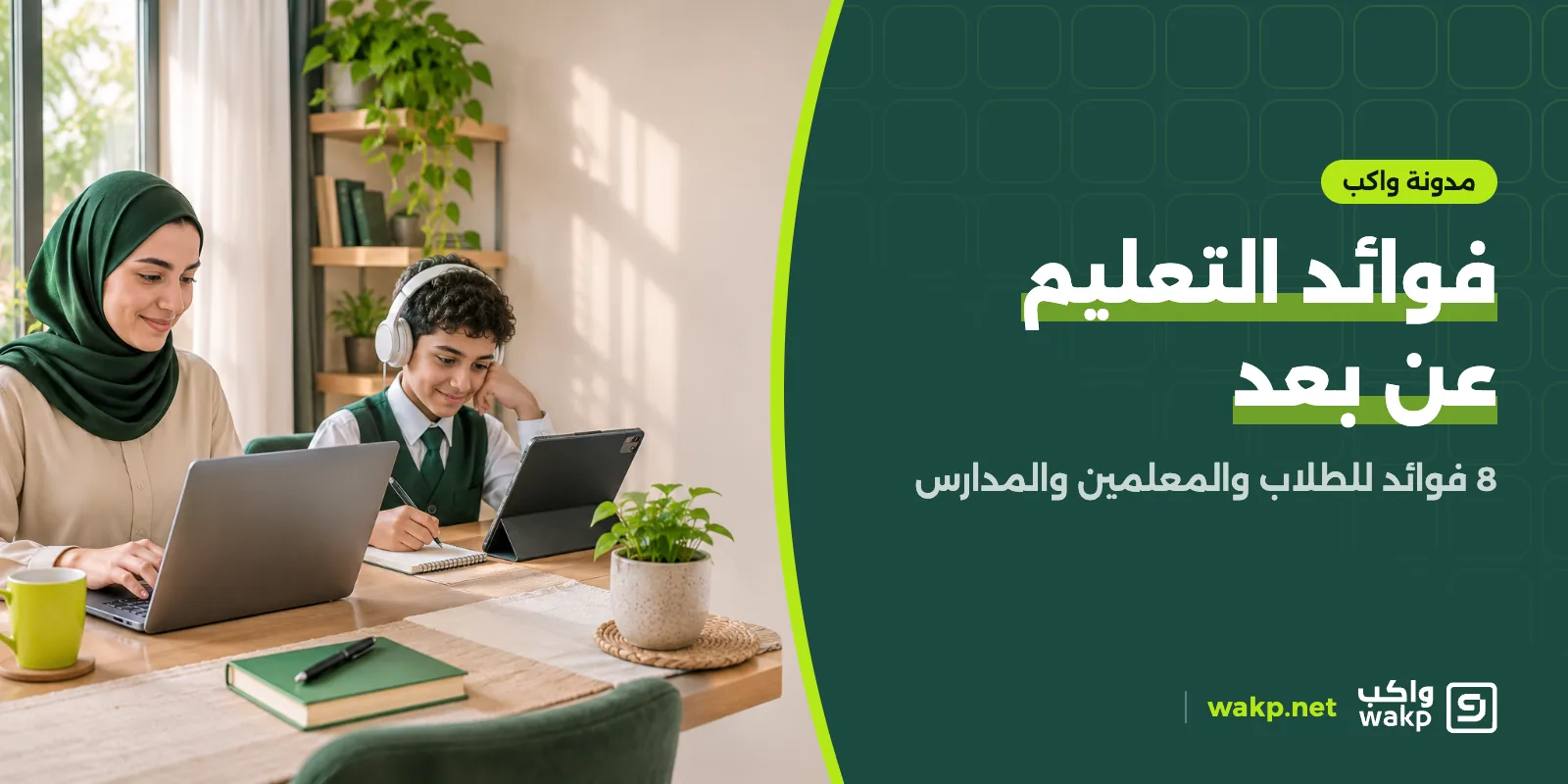
The benefits of distance learning go beyond studying from home: flexible timing, wider access, more self-directed learning and savings on travel. This article covers eight key benefits for students, teachers and schools, and the conditions that make each one real rather than theoretical. Because distance learning also has limits, our balanced view is in pros and cons of distance learning.
What is distance learning?
Distance learning is education where teacher and student are in different places and connect through digital media such as learning platforms, live sessions and recorded content. It can be fully remote or blended with in-class attendance.
The eight benefits of distance learning
1. Flexibility in time and place
Recorded content and online assignments let students learn when it suits them and replay what they did not understand. Condition: a clear schedule and published deadlines, so flexibility does not turn into postponement.
2. Wider access to education
Education reaches those far from school or unable to attend because of illness or travel. The World Bank sees particular opportunity for low- and middle-income countries to address teacher shortages and dropout, provided connectivity and digital skills are in place.
3. Better time management
Students learn to plan their day and set priorities, skills that carry into university and work. Condition: follow-up from teachers and parents at younger ages.
4. Stronger self-discipline and independent learning
When students take responsibility for following their lessons, intrinsic motivation grows. Badges, certificates and progress bars help keep them engaged.
5. Review content at any time
Recorded lessons and organised files remain available before exams, which helps students who need longer to absorb an idea.
6. Meeting diverse needs, including special needs
Digital learning allows pacing adjustments and varied content formats (video, text, files). Condition: suitable assistive tools and individual support; technology alone is not enough.
7. Professional development and networking
Distance learning gives teachers and staff professional training without leaving work, and widens networks through discussions and learning communities. UNESCO publishes a framework of ICT competencies for teachers that is a useful training reference.
8. Saving time and cost
It cuts daily travel and printing, and lets a school reuse content repeatedly. Condition: do not overlook the cost of the platform, training and technical support.
Benefits by audience
| Audience | Main benefits |
|---|---|
| Students | Flexibility, review, self-directed learning, fast feedback |
| Teachers | Reusable content, automated objective marking, progress tracking |
| Parents | Following homework and results, organised communication |
| The school | Continuity when attendance is impossible, less paper, wider reach |
How to make the benefits real
- An interaction plan: short live sessions, discussions and graded assignments, not just uploaded files.
- Organised content: clear units and lessons instead of material scattered across different apps.
- Follow-up: know who stopped logging in and step in early.
- Teacher training on the platform's tools and remote interaction methods.
- Fair access: alternatives for students without devices or connectivity.
For a broader look at classroom tools, read technology in education, and to build a platform for your institution see our guide to creating an e-learning platform.
Distance learning versus traditional learning: key differences
| Aspect | Distance learning | Traditional learning |
|---|---|---|
| Place and time | Flexible, and can be asynchronous | Fixed to the school building and timetable |
| Interaction | Through the platform, live sessions and discussions | Direct, face to face |
| The student's role | More self-directed, with responsibility for follow-up | Immediate follow-up from the teacher |
| Content | Digital, repeatable and reviewable | Explanation in class, books and handouts |
| Assessment | Online, with progress reports | Mostly paper-based |
| Requirements | Devices, connectivity and a platform | A building, classrooms and attendance management |
The difference does not mean one cancels the other; blended learning combines the strengths of both.
A brief look at how distance learning evolved
Distance learning began with correspondence and printed materials, then drew on radio and television, and with the internet moved to platforms, interactive content and live sessions. What changed is not the idea but the efficiency of the tools and the speed of feedback. Today distance learning plays a complementary role inside schools, not merely an emergency fallback when attendance is impossible.
Tips for students to benefit from distance learning
- Set a fixed study time as if you had a class.
- Prepare a quiet space and switch off unnecessary notifications.
- Break tasks into small parts and finish today's homework today.
- Take part in discussions and ask when you do not understand.
- Use review: replay the difficult part instead of skipping it.
Tips for parents
- Give your child a steady routine close to the school day.
- Follow the school portal to see homework and results.
- Contact the teacher early if you notice a decline.
- Watch screen time and balance it with rest and physical activity.
What are the limits of distance learning, and how can a school handle them?
The benefits do not arrive automatically. Distance learning has challenges that a school should face openly:
- Social interaction: direct contact between students is reduced. Live sessions, discussions and group projects can compensate.
- Unequal resources: not every family has a suitable device or connection, so favour lightweight content that works on a phone and keep alternatives for those who cannot join live.
- Motivation: students need short goals, quick feedback and follow-up that notices when someone's activity drops.
- Content quality: weak recorded content does not improve because it is online, so review it as you would any lesson.
- Assessment: it needs well-chosen tools and clear rules so that a mark reflects real learning.
- Teacher workload: preparing and following up online adds work, so give teachers templates, training and clear expectations about response times.
In practice, distance learning works best when it is part of a school system that tracks attendance, assignments and results, not a separate channel with no follow-up.
How wakp helps
wakp provides an online learning platform (LMS) for schools, academies and training centres that works with the school management system or standalone, supporting the benefits above with real tools:
- Content building: units and lessons as video, file or text, with last-watched-position tracking for video.
- Assignments and quizzes with objective and essay questions, live sessions and discussions between students and teachers.
- Progress tracking: progress per student and course, with alerts for inactive students.
- Badges and certificates with clear rules to encourage persistence.
- Student, teacher and parent portals, with notifications via an installable web app (PWA).
- Content distribution across several classes with review before publishing.
Read more in our guide to the learning management system.
The platform runs inside wakp's school management system, its details are on the e-learning platform for schools page, and guardians follow progress through the school and parent app.
Frequently asked questions
What are the main benefits of distance learning?
Flexibility in time and place, wider access, stronger self-discipline and time management, reviewable content, lower travel and cost, and learning for those who cannot attend in person.
Is distance learning suitable for all stages?
It suits every stage to different degrees. Young children need more supervision and interaction, and blended learning that combines attendance with digital content is often a balanced choice.
How do teachers benefit?
They can reuse content, automate marking of objective quizzes, track student progress, communicate in an organised way and spend less time on paperwork.
Does distance learning help students with special needs?
It can, by offering flexible pacing and varied content formats, but results depend on suitable assistive tools and support from teachers and parents.
What is needed for distance learning to deliver its benefits?
Available connectivity and devices, an organised platform, teacher training, a plan for interaction and follow-up, and alternatives for students who cannot access it.
How is this article different from the pros and cons article?
This one focuses on the benefits and how to realise them. The pros and cons article gives a balanced assessment including drawbacks and how to mitigate them.
Sources
Update log
- — Full rewrite and content refresh
- — Improved internal links